Is Tap Water Safe to Drink in Pakistan? What You Should Know
Clear water does not always mean safe water. Learn what may be present in your tap water, how to test it, and how to choose the right treatment solution.
Introduction
There was a time when drinking water from the tap was an ordinary part of daily life. Our parents did it, we did it in our childhood. But the question is can we still do it today?
Clear tap water can still carry microbial or chemical contamination that you can neither see or taste. Pakistan Council of Research in Water Resources (PCRWR) data highlighted in research and seminars held recently up to 2025, that only 47% of Pakistanis have access to safe drinking water and contaminated drinking water is behind many common waterborne diseases.
Here is what is in your tap water and how to make it safe.
Common Contaminants in Your Clear-looking Tap Water
Contaminants that are invisible to the naked eye generally fall into two groups;
Microbial Contamination
- Bacteria
- Viruses
- Parasites
- E.coli / coliforms as indicators of contamination
Chemical Contamination
- Arsenic
- Lead
- Nitrate
- Other dissolved chemicals/metals
How Can You Tell If Your Tap Water Is Safe to Drink?
A practical check starts with 3 things; know the source, notice changes, and test the water when there is uncertainty.
Know your water source
Start by finding out where your household water comes from. It may be supplied through a municipal network, a private bore, a tanker, or another source. The risks are not identical.
Groundwater, for example, can contain naturally occurring chemicals such as arsenic, while water moving through damaged infrastructure may face different contamination risks. Knowing the source helps determine what needs to be tested for rather than treating every water problem in the same way.
Look for changes
Changes in your water can be an early warning sign. Pay attention if it becomes:
- Cloudy or unusually turbid (cloudy)
- Discoloured
- Unusual in smell
- Different in taste
These changes can point to a problem with the source, supply network, plumbing, or storage. But the reverse is not true: clear, odourless and good-tasting water can still contain harmful contaminants.
Test the water
Testing provides a way to detect what the senses cannot. Checking drinking water for bacterial contamination can depend on laboratory facilities, trained personnel and time. This can make routine testing difficult, particularly where quality needs to be checked across multiple locations.
How to test tap water quality?
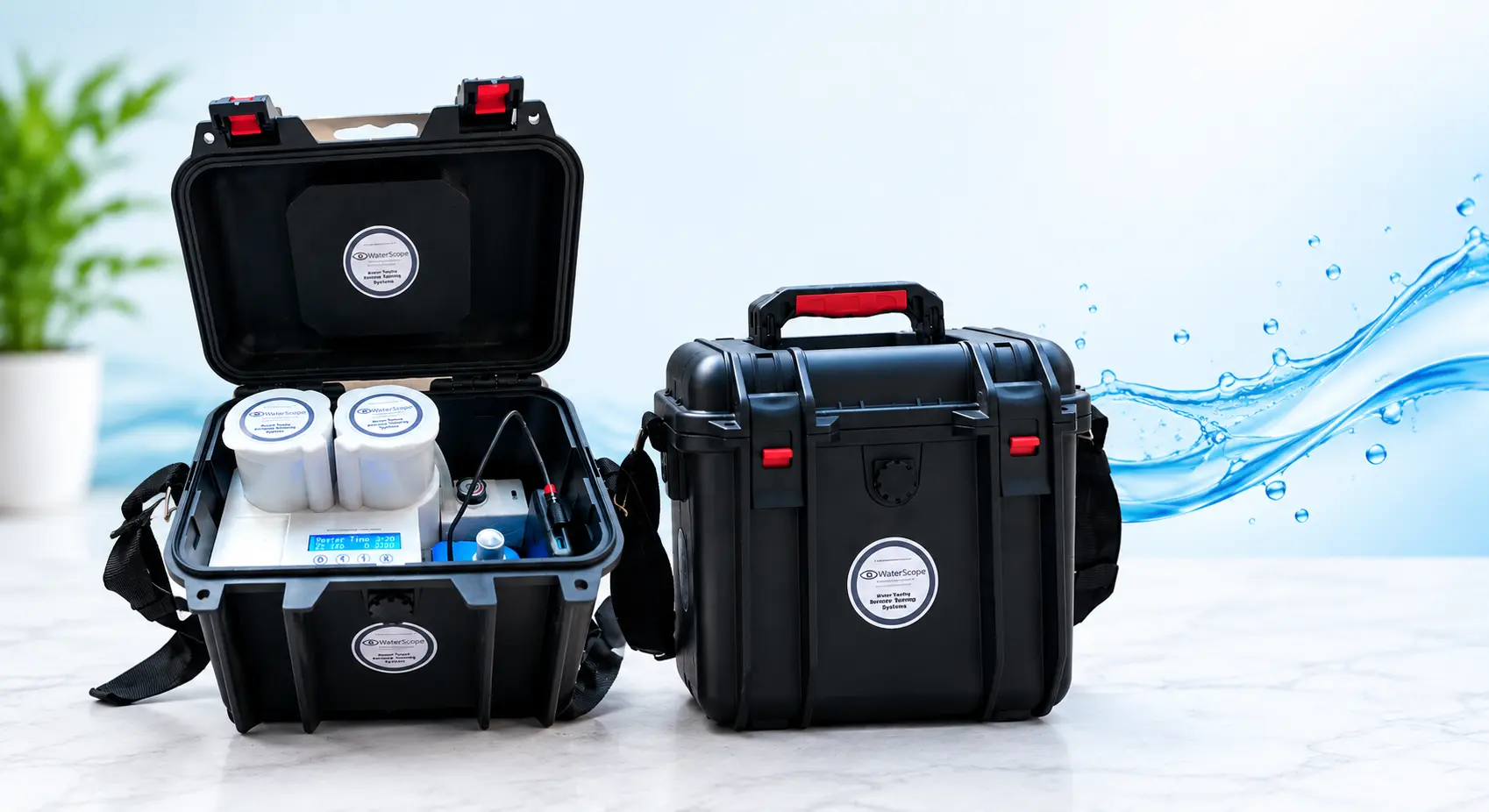
WaterScope brings bacterial water testing closer to the point of use. It is designed to test tap water on location without requiring specialist knowledge of laboratory procedures.
The system uses a high resolution microscopy and image-recognition software to automatically detect and count bacterial colonies, reducing the need for manual analysis. The results can be uploaded to a digital dashboard, allowing organizations to track tests across locations and use the data to identify areas that may require intervention.
Find Out More About WaterScope
Explore the WaterScope Portable Kit and learn more about bacterial water testing closer to the point of use.
Find Out More About WaterScope →For households concerned about tap water safety, this makes it possible to test for bacterial contamination closer to where the water is actually being used, not only in a laboratory.
Choosing the Right Treatment Starts With the Water Concern
Once you know what is affecting your tap water, the next question is what kind of treatment it needs. A personal bottle filter, a household system and a larger-capacity purifier are not interchangeable. The right choice depends on the contaminant, the amount of water you need to treat, and how the system will be used.
For bacterial, viral and protozoan contamination, membrane-based filtration can provide a practical treatment option. Ara International offers systems across different settings, from personal LifeStraw filters to household and larger-capacity solutions.
Explore Water Filtration Options
Explore LifeStraw solutions designed for different water-treatment needs and applications.
Explore LifeStraw →Where to Find Tap Water Filtration Solutions in Pakistan
Ara International brings internationally recognised water-filtration and purification brands, including LifeStraw, Wateroam and Uzima, to Pakistan and Afghanistan. Its range includes solutions designed for different water-treatment needs, from personal filtration to household and higher-capacity systems.
Verdict
Tap water can look clear and still contain microbial or chemical contaminants, while water quality can vary by source, location and the condition of the supply system.
If you have concerns about your tap water, testing first can help you understand the problem before choosing a treatment system. Once the concern is known, you can explore a filtration solution suited to your water source, household needs and intended use.
Safe drinking water starts with knowing what is in your water—and treating it accordingly.
QnA
Q 1: Are there risks to drinking tap water?
Yes. Tap water can carry bacteria, viruses, parasites, or chemical contaminants such as arsenic, lead, and nitrates. The risk depends on the water source and the condition of the supply system.
Q 2: Can tap water cause stomach issues?
It can. Bacteria, viruses, and parasites in contaminated water can cause gastrointestinal illness, even when the water looks clear and tastes normal.
Q 3: How can I test my tap water for bacteria?
Bacterial contamination can be checked through laboratory testing or on-site testing. WaterScope allows water to be tested closer to the point of use, helping identify bacterial contamination without relying only on appearance or taste.
Concerned About Your Water?
Explore water testing and filtration solutions suitable for different water-treatment needs.
Explore Water Solutions →